
· by Michael Blair, Nashville's Foundation Repair
Sticking doors are the symptom people notice first and the one with the most innocent explanations. In Middle Tennessee, humidity accounts for most of it, and the pattern over a year separates the two.
Seasonal is usually humidity
Wood swells as it takes on moisture. A door that binds from June to September and works fine in winter is doing what wood does in our climate.
The tell is that it frees up completely. Structural movement does not reverse itself on a schedule.
What suggests something structural
Binding that persists year-round or worsens each year. Doors that were fine and are now visibly out of square in their frames. Gaps at the top corner of a door frame.
And crucially, the presence of other signs at the same time: cracks at window corners, sloping floors, or gaps opening between trim and wall.
- Sticks only in summer: humidity
- Sticks all year and worsening: investigate
- Visible gap at one top corner of the frame: racking
- Accompanied by floor slope or drywall cracks: investigate
- One area of the house only: differential movement
Checking it yourself
A marble on the floor and a level tell you a lot. Consistent slope across a room, particularly toward one corner, is worth documenting.
Photograph and date drywall cracks at door and window corners, which are where racking shows first. Whether they grow over six months answers most of the question.
Crawl space causes
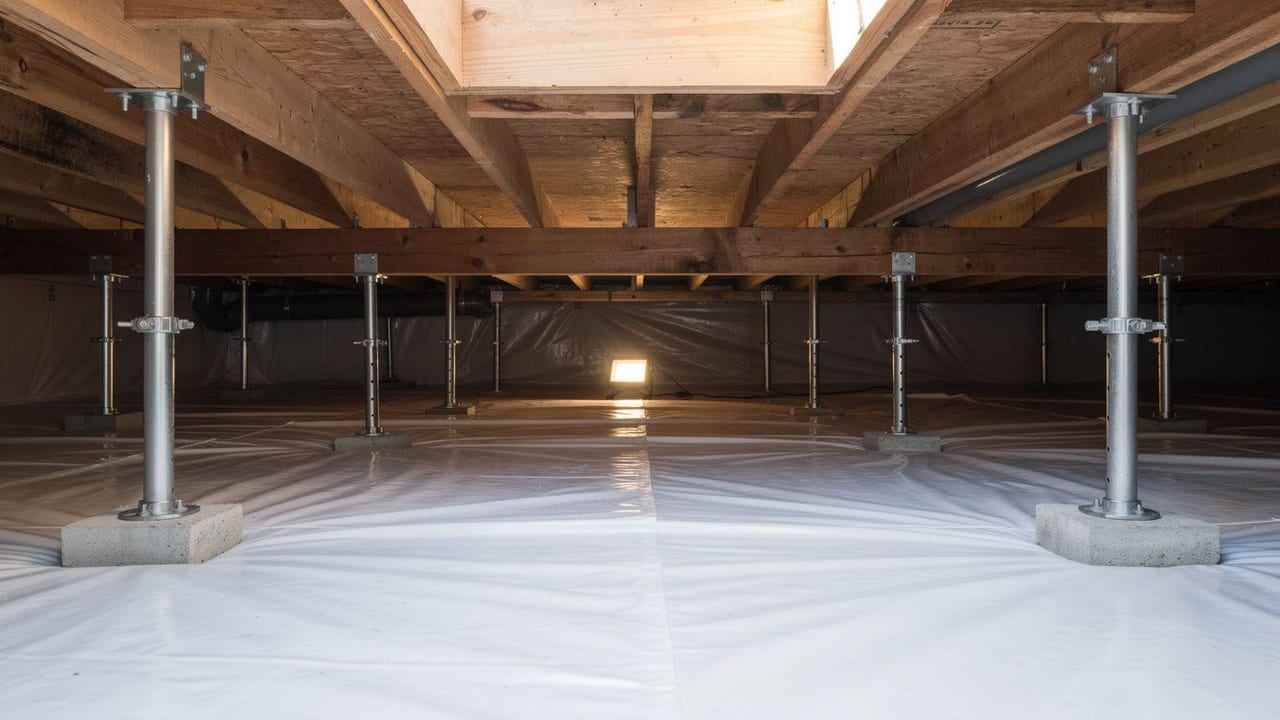
In Middle Tennessee, floor movement often originates in the crawl space rather than the foundation walls — a failed support post, a rotted girder, or moisture damage to joists.
That is both good news and worth acting on: it is usually far cheaper to fix than a foundation problem, and it gets worse if left in a damp crawl.