
· by Michael Blair, Nashville's Foundation Repair
A floor that dips in the middle of a room, slopes toward one wall or feels soft underfoot is one of the most common reasons people ask us to look under a house. On a house built over a crawl space, the answer is almost always under the floor, in the wood framing or in the supports holding it up. The two need different repairs, and fixing one without the other usually brings the sag back. Here is what makes floor framing fail, where the water comes from, and what we look at before a foundation inspection turns into a repair plan.
What causes a sagging floor over a crawl space?
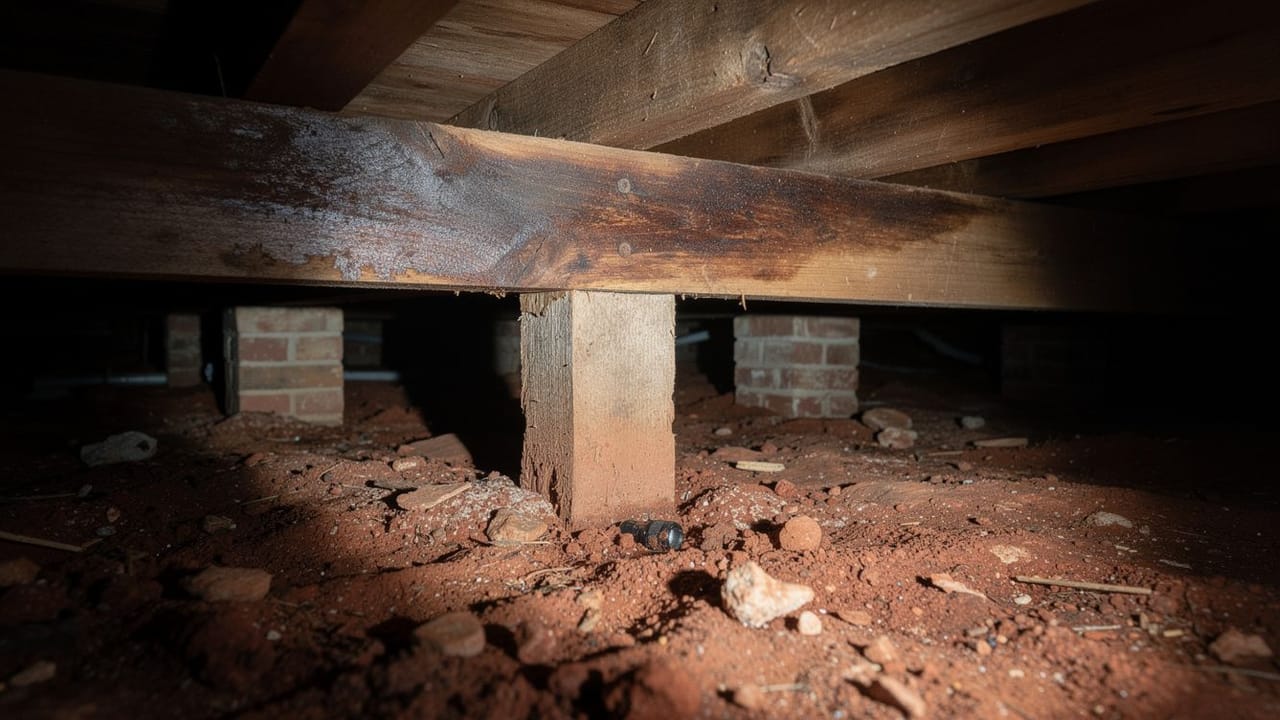
A sagging floor over a crawl space comes from one of two things, and sometimes both: the wood framing has stayed wet long enough to decay and lose strength, or something holding it up, such as a post, a pier or the girder those rest on, has sunk or shifted. The first is a moisture problem that shows up in the wood. The second is a support problem that shows up in the posts and piers and the ground under them.
Telling them apart takes going into the crawl space. We look at the joists and girders for staining, soft spots and fungus, take moisture readings in the wood, and check each post and pier for how it bears on the ground. A floor that has sagged because of soil movement under the foundation walls is a different case again, which our post on what Middle Tennessee clay does to a foundation covers.
How wet does wood have to be for floor joists to rot?
Floor joists rot when the wood stays wetter than its fiber saturation point, which averages about 30 percent moisture content. That is the threshold in the Forest Products Laboratory’s Wood Handbook chapter on biodeterioration, which says serious decay does not happen below it. The same chapter says fully air-dried wood usually holds no more than 20 percent, which leaves a reasonable margin of safety, and that wood kept that dry will not decay, while decay already present stops progressing.
The two numbers are not the same line. Thirty percent is where decay can take hold; twenty is the target that keeps wood safely clear of it. Humid air alone, the handbook says, will not wet wood enough for significant decay, though it can support mold. So a joist that reads under 20 percent is in the safe range, mold on its surface is a humidity sign, and a joist that is soft to a screwdriver point has spent a long time above the 30 percent line, wetted by a leak, by groundwater or by condensation.
Where does the water under a crawl space floor come from?
Water under a crawl space floor comes from the soil, from inside the space and from outside it. The Wood Handbook names soil moisture as the main source of the condensation that can seriously decay floor framing and sheathing over a crawl space. The Building America Solution Center’s pre-retrofit assessment for crawl spaces adds the sources inside the space, such as a bare earth floor, a dryer vented into it, plumbing leaks, condensate drains and open sump pits, and the signs outside, such as standing water after rain and damp or stained foundation walls. It notes that humidity above 50 percent supports mold growth.
The handbook’s answer to soil moisture is a barrier over the ground, such as polyethylene. Building America’s guide to a crawl space capillary break specifies polyethylene of at least 6 mil, with seams overlapped 6 to 12 inches and sealed, and the sheet carried at least 6 inches up the walls and piers. Water from outside is a grading and gutter question, covered on our drainage and grading page. Neither is optional: a framing repair in a crawl space that stays wet will rot again.
What fixing a sagging crawl space floor involves
Fixing a sagging crawl space floor starts with the cause, then the wood, then the supports. The Building America assessment says structural repairs to the framing will be needed where damage or rot is extensive. Decayed joists, rim joists or girders are replaced or reinforced with new lumber once the water source is dealt with, and the floor is raised back gradually.
Supports get their own check against the Wood Handbook. It says posts holding up floor girders should be concrete if they bear directly on the ground, and that joists should be kept at least 18 inches and girders at least 12 inches above the earth, with a vapor barrier over the exposed soil. A wood post sitting on dirt, a girder resting close to the ground, or a pier that has dropped are the things we replace or reset, on a proper footing, as part of a foundation repair.
If a floor in your house in Nashville or nearby has started to dip or feel soft, ask us to look under it. We will tell you whether it is the wood, the supports or both, and what it takes to fix the cause as well as the sag.
Sources
- USDA Forest Service, Forest Products Laboratory, Wood Handbook (FPL-GTR-282, 2021), Chapter 14: Biodeterioration of Wood — Serious decay only above the fiber saturation point (about 30%); air-dry wood at no more than 20% does not decay; crawl space condensation from soil moisture; polyethylene over the soil; joists 18 inches and girders 12 inches from the earth; posts on the ground should be concrete
- Building America Solution Center (PNNL, U.S. DOE), Pre-retrofit assessment: crawlspaces and basements — Interior and exterior moisture sources; structural repairs needed where damage or wood rot is extensive; humidity above 50% supports mold
- Building America Solution Center (PNNL, U.S. DOE), Capillary break: crawlspace floors, polyethylene lapped walls and piers — At least 6-mil polyethylene, seams lapped 6 to 12 inches and sealed, lapped at least 6 inches up walls and piers
FAQ
What Causes a Sagging Floor Over a Crawl Space — questions
Are sagging floors over a crawl space dangerous?
A sag means the framing or its supports have changed, and how serious that is depends on the cause. Decay that has softened joists or a girder weakens the floor, and the Building America assessment says extensive rot calls for structural repair. A crawl space that stays wet keeps the decay going, so have the floor checked rather than waiting.
What causes rotting floor joists in a crawl space?
Moisture held in the wood above its fiber saturation point, about 30 percent, for long enough for decay fungi to work. In a crawl space, the Forest Products Laboratory names soil moisture condensing on the framing as the main source. Building America adds plumbing leaks, dryer vents, condensate drains and water from outside, such as standing water after rain.
Does a vapor barrier stop floor joists from rotting?
It removes the main source of crawl space moisture, which is the soil. The Wood Handbook recommends a barrier such as polyethylene over exposed ground, and Building America specifies at least 6 mil with sealed seams lapped 6 to 12 inches and carried up the walls and piers. Leaks and outside drainage still have to be fixed separately.
Why do older homes have sagging floors?
An older crawl space with a bare earth floor or wood posts set on the soil has both conditions the Forest Products Laboratory warns against. Years of ground moisture can bring the framing to the point where it decays, and wood posts on the ground can rot or sink. Each sag still needs its own diagnosis.