
· by Michael Blair, Nashville's Foundation Repair
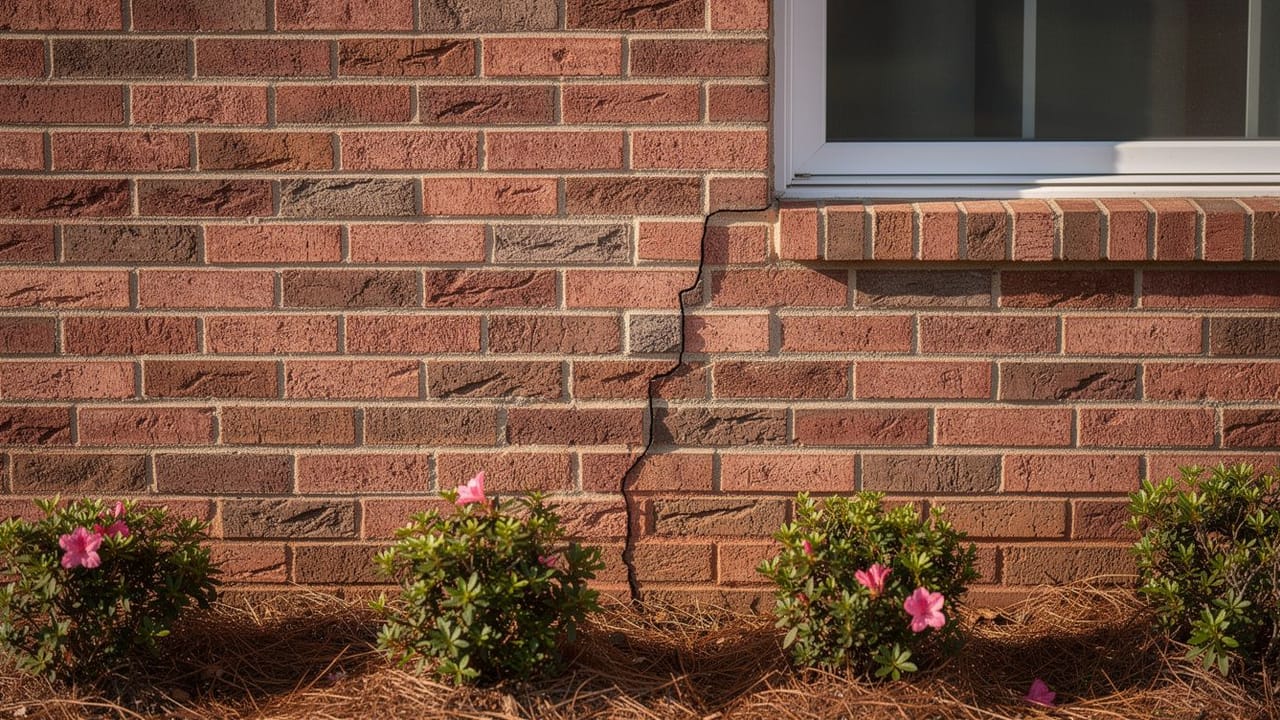
A crack that climbs a brick wall in steps, following the mortar joints up from one course to the next, is the crack most people picture when they worry about a foundation. Sometimes that worry is right. Just as often the brick is doing what brick does, growing and shrinking with heat and moisture and cracking where something holds it in place. The brick industry’s own technical note on movement gives the clues that separate the two, and this is how we read them before anyone talks about pier and settlement repair.
Why does brick crack in a stair-step pattern?
Brick cracks in a stair-step pattern when the wall is being pulled or pushed on a diagonal and the crack follows the mortar joints, along a bed joint and then up a head joint to the next course. One cause is the foundation. The Brick Industry Association’s Technical Note 18 on volume changes in brick says unstable or expansive soils often move or unevenly settle the foundations under brick, and that the settlement can show as diagonal or stepped cracks in the brick and mortar directly above the foundation.
It is not the only cause. The National Park Service’s article on common problems with brick masonry shows a typical stair-step crack that it puts down to swelling from temperature or moisture, and lists thermal and moisture expansion and contraction alongside differential settlement of foundations among the causes of cracking. The same pattern on a wall can have two different origins, and the repair for one does nothing for the other.
How can you tell a settlement crack from a movement crack?
Look at the crack’s shape, where it sits on the wall and how it changes through the year. BIA’s note says deflection and settlement cracks are identified by a tapering shape, wide at one end and narrowing to nothing, and that differential settlement cracks appear where one part of a building settles more than the part beside it. It places settlement cracking in the brickwork directly above the foundation.
Movement cracks turn up in other places. The note describes diagonal cracks between windows or doors, usually running from the head or the sill at the side of the opening, where the brick’s thermal and moisture movement is held back. On a wall with no expansion joint near a corner, it describes cracking at the corner, typically at the first head joint on one side. It also points out that brick walls expand while concrete foundations shrink, and that the stress where the two meet can crack the foundation or shift the brick at the corner unless a bond break or flashing lets them move separately.
- Tapers from wide to nothing, low on the wall just above the foundation: points toward settlement
- Runs from the corner of a window or door head or sill: points toward restrained thermal or moisture movement
- Sits near a building corner on a wall with no expansion joint: points toward movement
- Opens in cold weather and closes in warm: points toward thermal movement
Does the crack open and close with the seasons?
If it does, temperature is likely part of the story. The National Park Service notes that thermal cracks are normally cyclical, opening and closing with the season, wider in cold weather and narrower in warm, and advises watching a crack over time to see whether it is active. A crack that only gets wider, season after season, is a different matter, and that is when we look below the brick.
Soil can cycle too. Where a house sits on expansive clay, the ground swells when it is wet and shrinks when it dries, and a foundation can move with it, so a seasonal change is a clue rather than a verdict. Our post on clay soil and foundations covers that side. Measuring is simple: mark the ends, measure the width at the same spots and write down the date, as set out in how to track a foundation crack through the year.
What the repair looks like for each cause
For a movement crack, the repair is in the wall. The crack is repointed with mortar, and where the brick has nowhere to go, the lasting fix gives it room, which can mean an expansion joint near a corner or flashing where the brick meets the foundation. Filling the crack without giving the wall room to move leaves the cause where it was.
For settlement, the brick is only the symptom. The work is under the foundation, and pointing up the mortar first just hides the crack you need to watch. That is what our pier and settlement repair crews do, and where a wall rather than a footing is moving, it is foundation wall repair. For the wider list of cracks that matter and those that don’t, see which foundation cracks matter.
We look at cracked brick on homes across Nashville and the towns around it. If you have a stepped crack and want it read in person, ask us for a free written estimate; we measure it, explain what is moving and put the repair in writing.
Sources
- Brick Industry Association, Technical Notes on Brick Construction 18: Volume Changes, Analysis and Effects of Movement (May 2019) — Unstable or expansive soils can cause foundation settlement and diagonal or stepped cracking directly above the foundation; settlement cracks identified by a tapering shape; restrained thermal and moisture movement cracks at window and door openings and at corners without expansion joints; brick expands while concrete foundations shrink, relieved by a bond break or flashing.
- National Park Service, Common Problems with Brick Masonry — Stair-step crack attributed to temperature or moisture swelling; differential settlement and thermal and moisture expansion and contraction among causes of cracking; thermal cracks are cyclical, wider in cold and narrower in warm; monitor over time to see if active.
FAQ
Stair-Step Cracks in Brick: Settlement or Movement — questions
Are stair step cracks in brick serious?
Some are and some are not. A crack that tapers from wide to nothing low on the wall, just above the foundation, fits the brick industry’s description of settlement and needs a look below the brick. A crack that runs from a window corner and opens and closes with the seasons usually points to the brick’s own movement.
Do brick veneer cracks mean foundation problems?
Not always. Brick grows and shrinks with temperature and moisture, and where it is held in place, at window and door openings or at corners without an expansion joint, it can crack with no foundation movement at all. Settlement is the cause to rule out when a crack tapers and sits directly above the foundation.
Can brick cracks be thermal?
Yes. The National Park Service lists thermal and moisture expansion and contraction among the common causes of cracking in brick, and notes that thermal cracks are usually cyclical, wider in cold weather and narrower in warm. Measuring a crack at the same marked spots through the year shows whether it moves that way.
Should you repoint cracked mortar joints?
Eventually, but not first. Repointing before you know the cause hides the crack you need to watch, and if the foundation is still settling or the wall has no room to move, the crack can open again. Find the cause, fix it, and then repoint so the new mortar sits in a stable wall.
Why does brick crack near the corners of a house?
Often because the brick has nowhere to move. The Brick Industry Association notes that brick moves with heat and moisture, and that a corner with no expansion joint near it can crack. The same restrained movement shows up as diagonal cracks between windows and doors. A corner crack that tapers is a different case, and points to settlement.