
· by Michael Blair, Nashville's Foundation Repair
A general home inspector will flag foundation concerns and recommend further evaluation, which is appropriate but not a diagnosis. Knowing what to look at yourself helps you decide when to spend on an engineer before an option period runs out.
Outside
Walk the perimeter. Look for stair-step cracking in brick, particularly near corners and above openings, and for a wall that is out of plumb.
Then look at where water goes: downspouts discharging at the wall, grade sloping toward the house, and beds built up above the brick ledge.
Inside
Cracks at the corners of door and window openings, doors that do not sit square in their frames, and floors that slope consistently in one direction.
Fresh paint or new drywall in only one area of an older house is worth a question. It is not evidence of concealment, but it is worth asking what was repaired and why.
- Stair-step cracks in brick, especially at corners
- Walls out of plumb
- Doors out of square in their frames
- Consistent floor slope in one direction
- Downspouts and grading at the perimeter
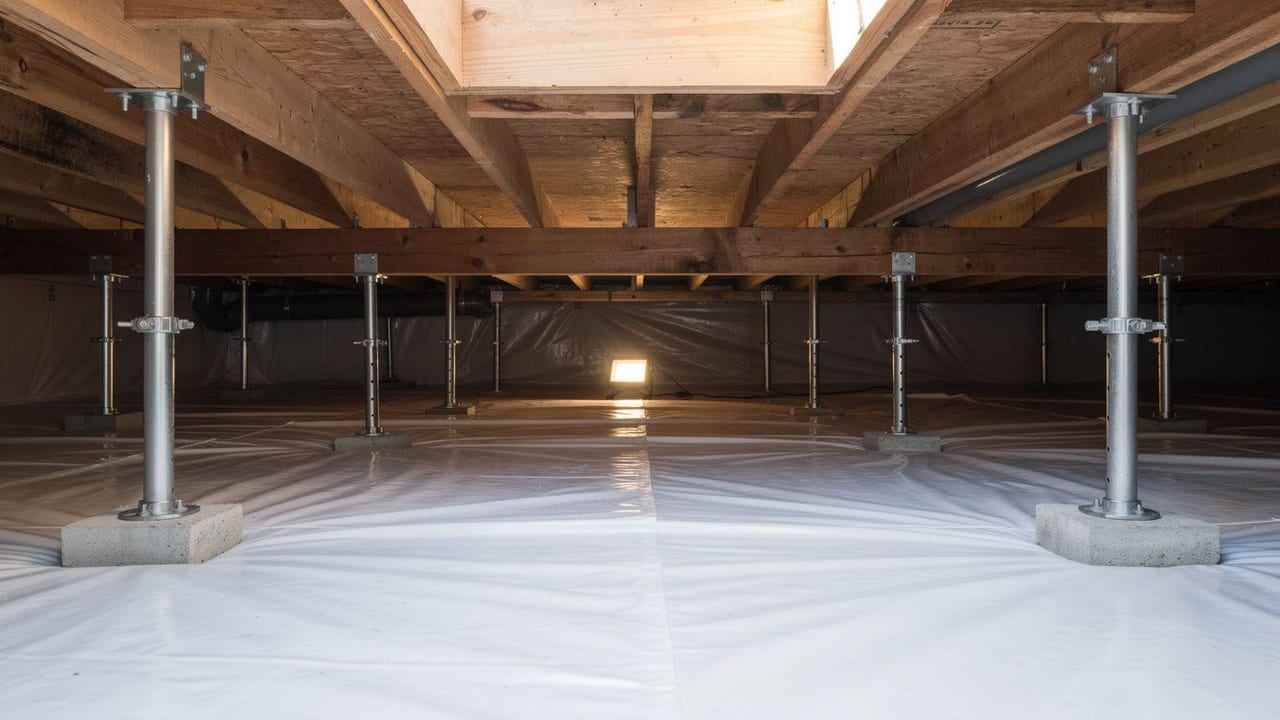
- Crawl space: standing water, rot, failed posts
The crawl space is worth the trouble
Most Nashville houses have one, and it tells you more than any other single place. Standing water, a musty smell, rotted joists, sagging girders and posts that have settled are all visible.
It also shows whether previous work has been done, and whether it was done well.
When to call an engineer
Any horizontal crack, any bowing wall, significant stair-step cracking with displacement, or a combination of interior symptoms.
An engineer’s report costs a fraction of a repair, is independent of anyone selling one, and gives you something concrete to negotiate with or walk away from.