
· by Michael Blair, Nashville's Foundation Repair
Piers transfer a foundation’s load past unstable soil to something that will carry it. They are the right answer for genuine settlement and the wrong answer for a shrinkage crack, and the gap in cost is very large.
What piers do
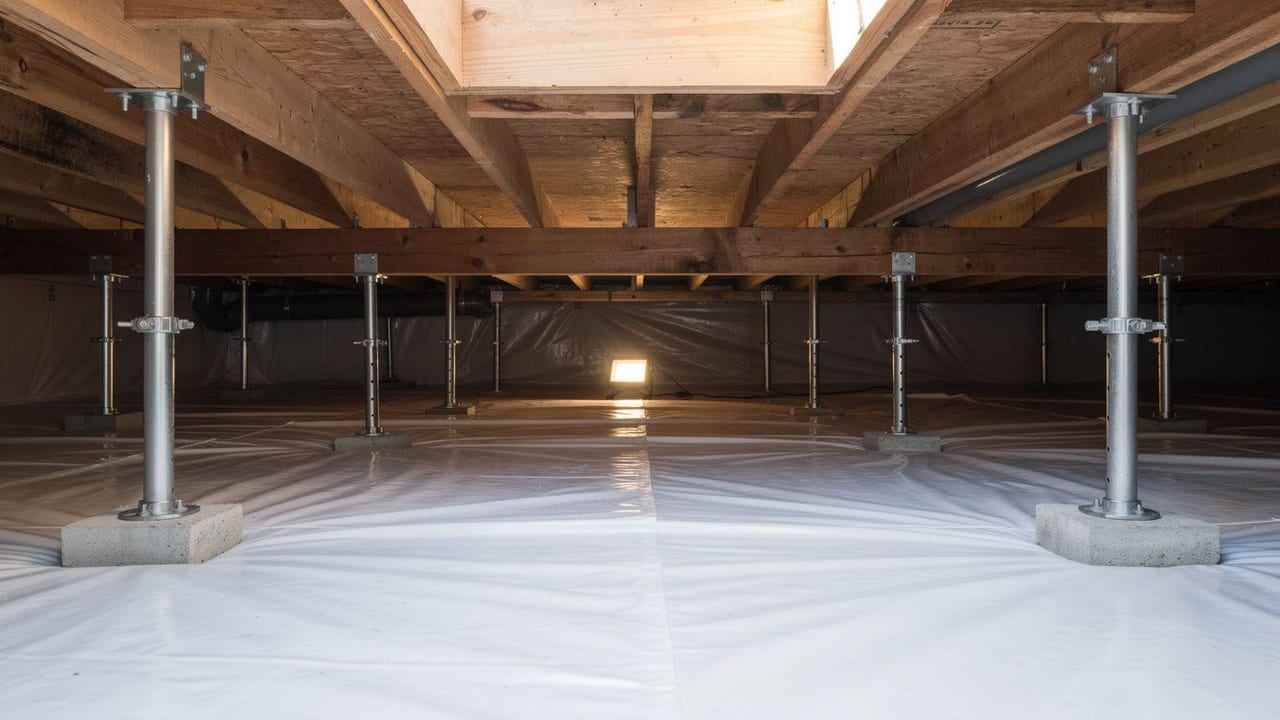
They are driven or screwed down until they reach load-bearing strata or refusal, then the foundation is transferred onto them. That takes the house off the clay that has been moving.
They can stabilize in place or, sometimes, lift back toward original position. Lift is not always achievable and promising it is a warning sign.
Push piers and helical piers
Push piers use the weight of the structure to drive steel sections down, so they suit heavier structures. Helical piers are screwed in and generate their own capacity, so they suit lighter structures and additions.
Both are legitimate. Which suits a job depends on structure weight and soil, and a contractor should be able to explain the choice.
- Piers: for genuine settlement of the footing
- Wall anchors or carbon fiber: for bowing walls under lateral pressure
- Crack injection: for water, not for movement
- Drainage and grading: for the cause of most of it
- Slab jacking: for slabs, not for footings
Bowing walls need something different
A wall pushed inward by soil pressure is not settling, so piers do nothing. Carbon fiber straps handle modest bowing; wall anchors or braces handle more.
The pressure usually comes from saturated clay, so drainage correction accompanies any of them or the problem continues.
Getting a second opinion
Foundation repair is expensive and the diagnosis determines the price. An independent structural engineer’s report costs a fraction of the work and gives you something to quote against.
It also lets you compare contractors on the same defined scope, rather than on three different descriptions of what is wrong.