
· by Michael Blair, Nashville's Foundation Repair
Homeowners discovering a stair-step crack in a block wall usually call the insurer first. Almost always the answer is no, and it is not an adjuster being difficult. Standard policies exclude earth movement and settling by design, and that exclusion covers most of what actually happens to foundations in Middle Tennessee.
What the exclusion actually says
A standard homeowner policy excludes earth movement, which is written broadly and generally includes settling, shifting, expansion and contraction of soil, and subsidence. It separately excludes damage from continuous or repeated seepage over time, and from neglected maintenance.
Between those, the ordinary Middle Tennessee failure mode is excluded twice over. Expansive clay swelling in a wet spring and shrinking in an August drought is soil expansion and contraction, and the damage it causes accumulates gradually, which is precisely what the policy language carves out.
The exceptions that do get paid
Sudden and accidental events are the general test. A plumbing supply line under the slab that bursts and washes out the soil is a covered peril in many policies, and the resulting foundation damage may follow. A vehicle striking the foundation, or an explosion, are covered.
A tree falling and damaging the structure is covered as a falling object rather than as earth movement. Damage from a sudden burst is treated differently to damage from a slow leak that has been going for months, which is the distinction adjusters spend the most time on.
- Sudden burst of a supply line under the slab: often covered
- Slow leak over months causing the same damage: generally not
- Vehicle impact or explosion: covered
- Clay shrink-swell, settling, subsidence: excluded
- Poor original construction or drainage: excluded
What to do instead of filing
Establish the cause before spending anything. A structural engineer working for you rather than for a repair company will tell you whether the movement is active, what is driving it and what the actual remedy is. That report is worth more than several contractor opinions and it costs less than most of them lead to.
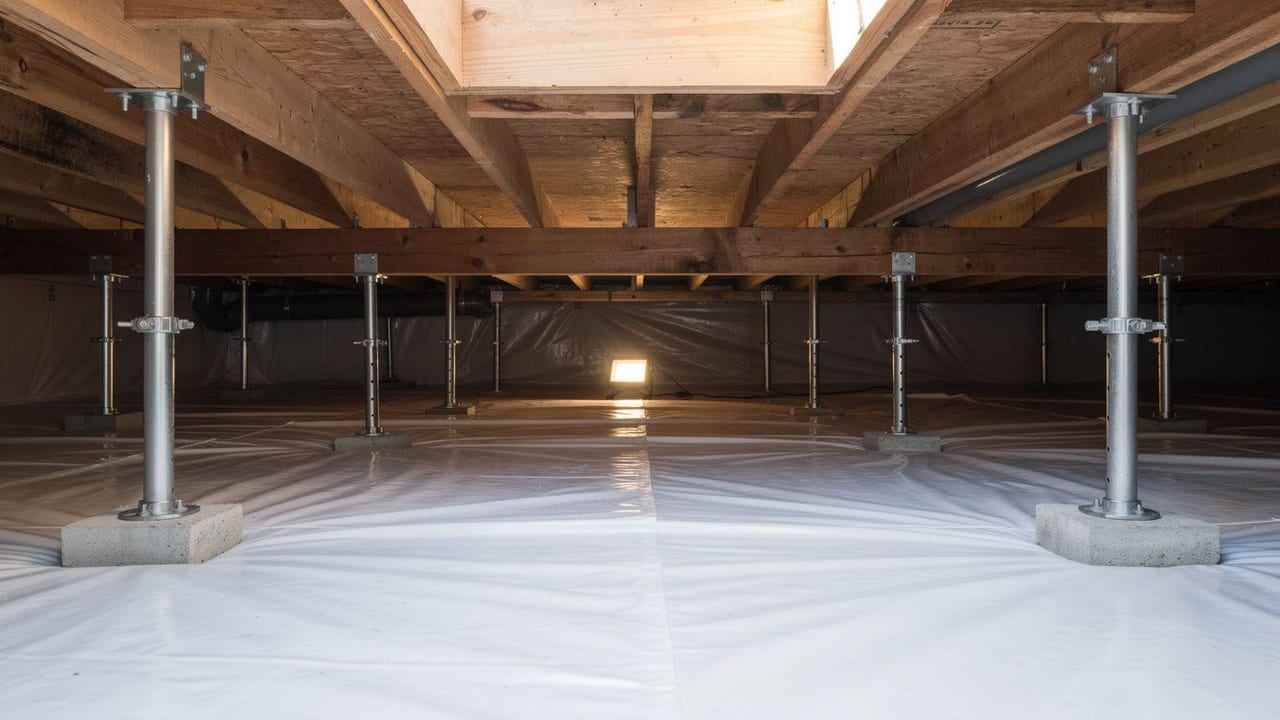
Then address the water, because water is what moves clay. Gutters that discharge well away from the house, grading that falls away rather than toward, and a crawl space that is not holding moisture do more for a Middle Tennessee foundation than any product sold door to door.
The disclosure and resale side
Foundation repair is disclosable at sale in Tennessee, and buyers ask. That is an argument for having the engineering report, the permit if one was required, the scope of work and the warranty documented and kept together, because a repair with paperwork reads very differently to a buyer than a repair without.
It is also an argument against the cheapest available fix. A transferable warranty from a company likely to still exist is part of what you are buying, and it is the part that has value at closing rather than on the day of the work.